

Teaching About Holocaust Remembrance
Why Holocaust education still matters—and how educators can address rising antisemitism with trusted, classroom-ready resources.
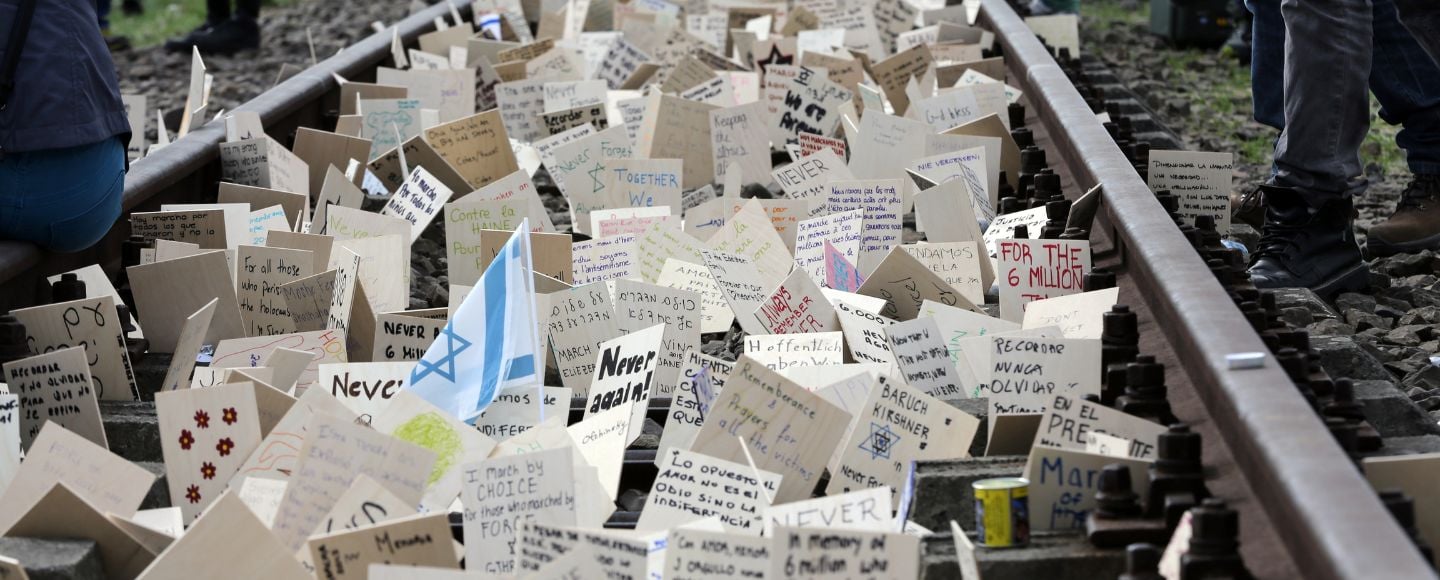
People from around the world meet at the concentration camp Auschwitz-Birkenau for the March of the Living to commemorate the victims of the Holocaust. Photo credit: wjarek
Share
January 23, 2023
Why Holocaust education still matters—and how educators can address rising antisemitism with trusted, classroom-ready resources.
Share
This blog was originally published on January 23, 2023, and updated in January 2026.
In 2005, the United Nations General Assembly passed Resolution 60/7 declaring that Holocaust Remembrance Day is to be observed on Jan. 27, the anniversary of the liberation of Auschwitz-Birkenau, the largest Nazi concentration and extermination camp. However, the internationally recognized date for Holocaust Remembrance Day, Yom HaShoah, marks the anniversary of the Warsaw Ghetto Uprising and corresponds to the 27th day of Nisan on the Hebrew calendar (typically in April or May). Together, these commemorations honor more than 6 million Jews and millions of other victims, including Poles, Ukrainians, Roma, labor unionists, “subversive” artists, resisters, members of the LGBTQIA+ community, people with disabilities, political dissidents, and others murdered by the Nazi regime during World War II. These days serve as a reminder of the dangers of hatred, prejudice, and discrimination and as a call to action to confront antisemitism, fascism, and genocide in all forms.
But remembrance alone is not enough. Does your school include Holocaust education? As of 2024, fewer than half of U.S. states require students to learn about the Holocaust in school. In the remaining states, many young people rely on secondhand information from family, peers, or social media, where misinformation and denial thrive unchecked. Without formal education, students may never learn the facts about what happened or understand the dangers of forgetting.
Explore resources that will assist students in identifying and dismantling disinformation campaigns online and in the media.
When history is sidelined in schools, the consequences are real. We’ve seen a rise in book bans that target Holocaust literature, including The Diary of Anne Frank. At the same time, antisemitic conspiracy theories and stereotypes are spreading rapidly online, often unchecked by historical understanding. These trends underscore why Holocaust education isn’t optional—it’s a safeguard against ignorance and hate.
According to ADL’s most recent Antisemitic Attitudes in America 2024 report, antisemitic beliefs remain deeply entrenched—and appear to be increasing, particularly among younger Americans. Nearly 1 in 4 Americans (24%) now agree with six or more anti-Jewish tropes—a sharp rise from 20% in 2022. Millennials and Gen Z respondents endorsed more anti-Jewish stereotypes than older generations, reversing previous generational trends. The report also found that conspiracy thinking and beliefs about societal dominance were strong predictors of antisemitic attitudes. For example, individuals who believe that some groups are naturally inferior were 3.6 times more likely to endorse antisemitic tropes.
The rise in antisemitism, alongside gaps in Holocaust knowledge among students, highlights the importance of intentional, well-supported Holocaust education in schools. Providing educators with strong resources and opportunities for community dialogue helps ensure students learn accurate history, understand the consequences of hate and scapegoating, and are better prepared to recognize and challenge bigotry in all its forms.
The United States Holocaust Memorial Museum’s annual Statistical Risk Assessment issued through its “Early Warning Project” works to identify countries at risk for mass killing, raise warning signs, and encourage policy makers to take action to prevent mass atrocities. Learn more about why this work is important, and view a map of countries that are seen as “at-risk” for mass atrocities.
Share My Lesson works with partners like the United States Holocaust Memorial Museum and other like-minded organizations, alongside educators and community members, to create free lesson plans and resources for K–16 educators and families. These materials are designed to support classroom learning and open meaningful dialogue with students about the Holocaust, its impact, and its legacy. Explore a selection of nine resources from our Holocaust Remembrance collection and see how you can raise awareness in your classroom and community.

As heightened antisemitism and outright denial of facts concerning the Holocaust become more commonplace, this program opens up classrooms to new, vital questions about complicity, propaganda and responsibility. This webinar with the USC Shoah Foundation - Institute for Visual History, is available for one-hour of PD credit.

The lesson from user Anastasia Belyaeva introduces students to the personal story of a Holocaust survivor. Students learn about the visual elements as the impactful narrative devices used to convey the ideas and attitudes that underpinned the experience of persecuted Jews. In the course of the lesson, students explore how illustration and motion graphics reinforce the personal narratives of the Holocaust survivors.

By providing a concise overview of the Holocaust and what made it possible, this resource from the United States Holocaust Memorial Museum is intended to provoke reflection and discussion about the role of ordinary people, institutions, and nations between 1918 and 1945.

The United States Holocaust Memorial Museum provides guidance to help educators increase their knowledge of Holocaust history and implement sound teaching strategies. With these resources, the Museum presents an overview of rationale, methodology, essential topics to teach, and where to find authoritative and appropriate content.

This lesson from ADL provides an opportunity for students to learn about and reflect on these current incidents, understand how people and groups can make a difference, and explore the various ways different people and groups can act as allies, advocates and activists in order to enact change.

Survivors of the Holocaust tells the true stories of six children who survived the Holocaust in a graphic non-fiction novel form. This educator guide from Sourcebooks provides questions and activities to help children read and understand the text.

Hank Fellows, known as "America's Songwriter," has inspired many with his patriotic songs across the U.S., including his 2006 Holocaust reflection, "6,000,000." This impactful song, first performed at New Jersey's Holocaust Remembrance Day, has been widely embraced by educational institutions, religious organizations, and groups like the Anti-Defamation League. Use this song and accompanying teachig guide to engage students.

Join one of the keynote sessions on demand from the 2023 Share My Lesson Virtual Conference for an enlightening discussion on "The U.S and the Holocaust," a documentary series by Ken Burns, Lynn Novick, and Sarah Botstein exploring America's response to the Holocaust. Director Sarah Botstein discusses the series' creation, its impactful testimonies, and Facing History shares educational strategies for classroom integration.

Inspire your students to launch their own “Samuel Project” with these project-planning activity sheets from Young Minds Inspired designed to help middle school and high school art and language arts studentschronicle the stories of an older relative or friend in any medium, including drawing, cartooning, animation, photography, video, and music.

This lesson from Echoes & Reflections provides primary source documents and visual history testimony about the Kristallnacht Pogrom, which is widely considered a key turning point in the Nazi agenda against the Jews. Students study several documents related to the event in order to compare and contrast source material and think critically about the significance of this pogromfor the Jewish people and in the context of Nazi Germany.

Watch this speech from Senate Majority Leader Chuck Schumer given on Nov. 29, 2023, addressing the rise of antisemitism in the U.S. Schumer, the nation's highest-ranking Jewish elected official, describes the recent spike in antisemitic incidents as a "crisis" and a "five-alarm fire” that must be extinguished. Then utilize the accompanying lesson plan.
Honoring the experiences, struggles, and losses of past generations is essential to our shared sense of humanity, especially when those histories reflect injustice and oppression. Holocaust education plays a critical role in helping students understand the consequences of hatred, discrimination, and dehumanization, while equipping them to recognize the warning signs of mass violence and genocide. By studying the Holocaust and other genocides, students engage with some of the darkest chapters of human history and examine the social, political, and cultural conditions that allowed such atrocities to occur. This learning fosters empathy, critical thinking, and respect for human rights, preparing young people to challenge hate-driven ideologies and stand up for dignity and justice in their own communities.
To continue this learning, explore Share My Lesson’s Jewish American Heritage Month collection, which offers additional resources celebrating the contributions of Jewish Americans and the values of Judaism, and highlights their enduring impact on U.S. history and democracy.
Teach the Holocaust with confidence. Explore free lesson plans and resources to raise awareness and analyze its lasting impact.
Want to see more stories like this one? Subscribe to the SML e-newsletter!